


Estonia’s ambition: reaching the global Top in Artificial Intelligence implementation
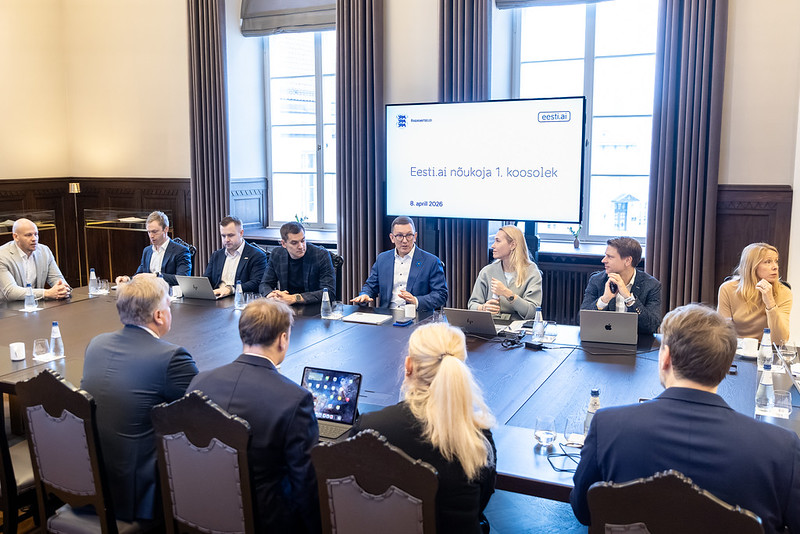
The Eesti.ai council has confirmed 15 high-impact projects aimed at accelerating the adoption of artificial intelligence (AI) in Estonia and strengthening the country’s competitiveness. Prime Minister Kristen Michal stated that the goal is to position Estonia among the world’s leading AI implementers
“Doctors, teachers, accountants, HR staff, musicians, translators, and many others will have more time for substantive work, learning, and engaging with people when using AI. Less time will be spent on searching for information, paperwork, and routine tasks. There will also be more free time for oneself and one’s family,” said Michal
Economic impact: hundreds of millions in growth
For businesses, AI enables increased productivity, while for the state, it offers faster and better services
“We are not just talking about AI; we are putting it to work for the benefit of people, the state, and businesses. We have selected the first 15 projects that will truly change how people work, learn, and how services are provided,” said Markus Villig, Chairman of the Eesti.ai Council
.
15 strategic projects: an engineering perspective
The initial 15 pilot projects cover human skills development, healthcare, entrepreneurship, the public sector, education, and infrastructure
Healthcare Revolution: Developing AI-based solutions for the GP (General Practitioner) information system and e-Ambulance to reduce documentation time by half and allow medical staff to focus more on patients
Support for Industry: AI development grants ranging from €100,000 to €500,000 will focus on industry, robotics, "physical AI," and healthcare to increase productivity and export capacity
Linguistic Sovereignty: A project led by the Institute of the Estonian Language aims to create a dataset of 10,000 human evaluations to ensure open-source language models accurately understand Estonian language and culture
Computational Infrastructure: The state will map the demand for local AI computing power to determine the necessity of dedicated national infrastructure
The world’s most "AI-literate" nation
Kirke Maar, the team lead of Eesti.ai, emphasised that skills and broad-based involvement are at the heart of the initiative
“We want AI skills not to remain the advantage of a few, but to become a natural part of the knowledge and working lives of the Estonian people,” said Maar
SOURCE: EESTI.AI